Conductive glass and conductive acrylic signage can both create transparent illuminated displays, but a front photograph does not resolve the substrate or electrical system. Compare the clear carrier, lettering, support and power arrangement as separate parts of the design. The right choice depends on the proposed dimensions, mounting position and how the display will be handled.
PRADA MILANO white illuminated letters on a transparent panel.
Compare the Sign Formats
Glass Carrier
For a glass-based proposal, establish the edge treatment, fixing positions and support frame alongside the lettering. Compare the intended transparency and visible hardware, then ask for the electrical connection arrangement for that specific product rather than treating every clear glass sign as an identical system.
For an acrylic-based proposal, review the panel span, thickness, suspension points and lettering together. Acrylic is a different substrate with its own handling and support considerations; the suitability of a suspended display should be assessed from its actual construction and intended position.
A transparent material description is not a complete power specification. Ask how electricity reaches the letters, where connections are made and how conductive areas are insulated and accessed. Confirm those details against the proposed assembly, especially if a low-visibility wiring effect is important.
Photographed Fabrication and Application References
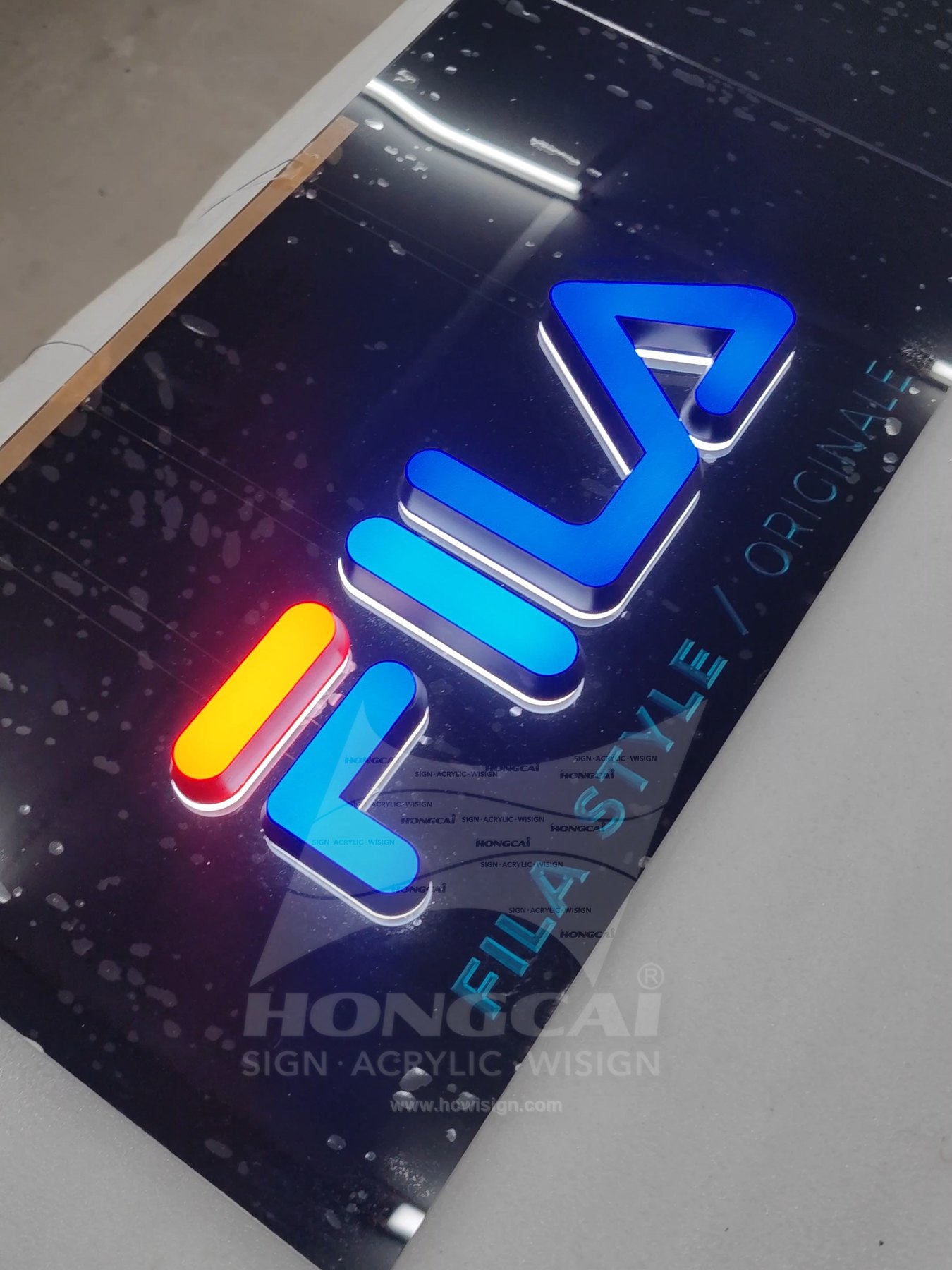
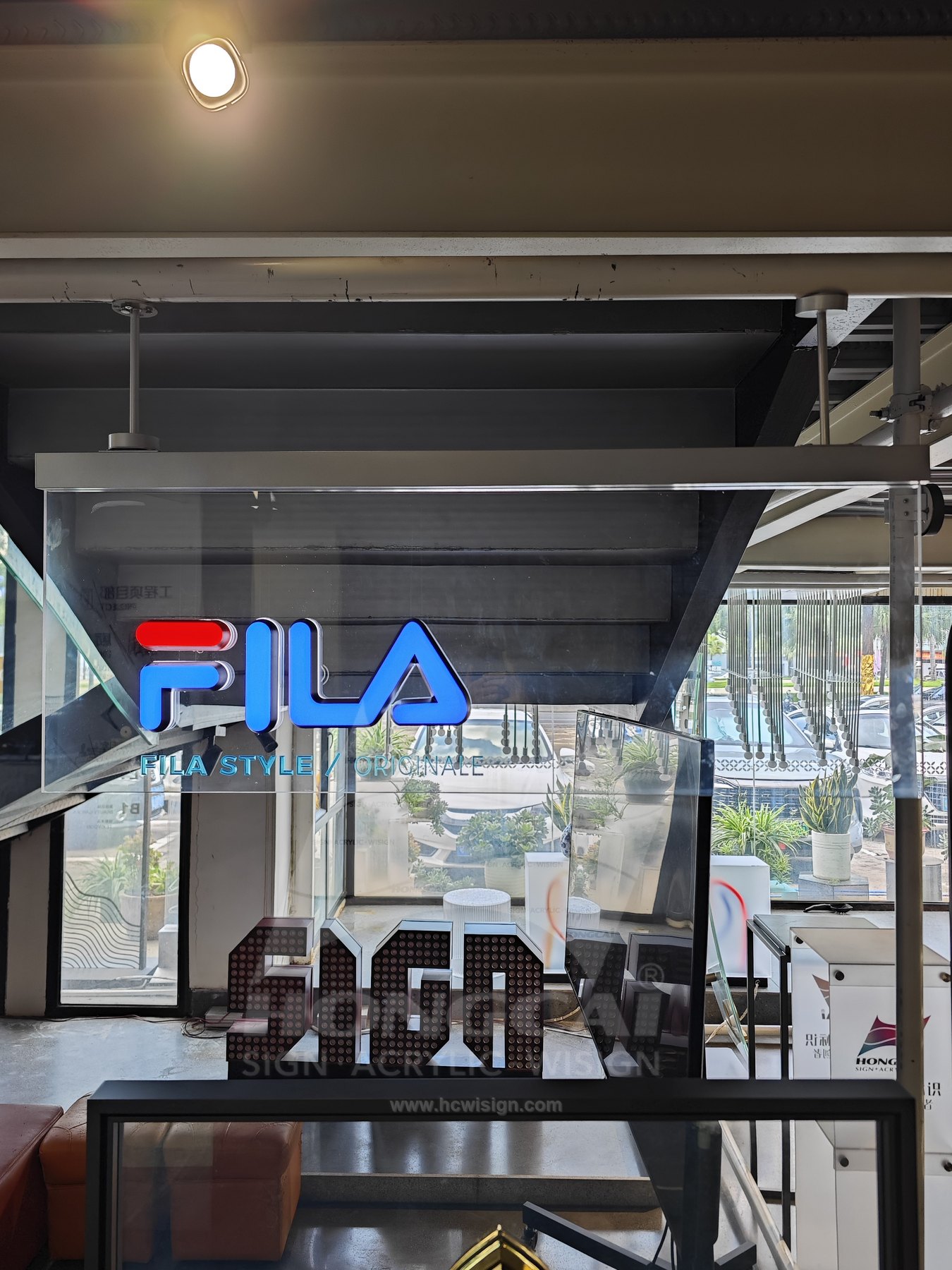
The PRADA workshop hanging panel and FILA acrylic display illustrate a similar transparent visual goal. They are separate products, not matched material tests, so use them to compare appearance and support arrangements rather than to infer performance differences.
PRADA MILANO Transparent Hanging Illuminated Sign
The PRADA MILANO reference has white illuminated lettering on a transparent panel suspended from a black top rail and rods. It helps compare letter spacing, clear area and the visible support structure in a hanging display.
PRADA MILANO white illuminated letters on a transparent panel.Another view of the same hanging panel and letter arrangement.
FILA Suspended Clear Acrylic Illuminated Sign
The FILA acrylic display uses illuminated lettering on a clear panel suspended from an overhead rail and rods. The stair space remains visible around the letters, showing how transparency and support hardware share the composition.
FILA clear acrylic illuminated sign during a workshop detail check.FILA suspended illuminated sign with the interior stair space behind it.
Plan the Artwork and Site Conditions
Review the artwork alongside the intended location. A sign that looks balanced in a close-up photograph may need a different letter size, mounting position or light treatment when viewed from the actual approach.
Compare the Same Brief
Use one brief for both proposals: the same overall outline, lettering area, mounting zone and operating location. This makes the visible support and electrical differences easier to assess than comparing unrelated products with different sizes and layouts.
Installation and Handling
Describe the access route, mounting position and expected handling during installation. Include cleaning access and any need to remove the panel, so the substrate choice and support design address the full life of the display.
Sample Review
Review lettering, transparent edges and connection areas against the intended background and lighting. Agree the assembly drawing and a representative appearance sample before fabrication, with any remaining material or power-system questions resolved in the proposal.
Prepare a Custom Sign Inquiry
Attach the photographic reference you prefer and mark the lettering, colour and illuminated areas you want to retain. Include the information below so the proposal can address the complete sign, its supports and connection requirements together.