
Halo lit letters
Opaque letter faces with rear illumination create a halo around the outline. Letter height, stroke width and the wall surface guide the construction, which should be reviewed through drawings and samples.
Backlit Signs
HC WISIGN fabricates backlit letters, backlit logos and illuminated signs for commercial spaces. Light directed from the rear onto the wall forms a halo around the letter or panel outline.
From room plates to reception wall logos, review the artwork, background and fixing conditions together. Reference photographs help explain whether the face, edges or area behind the sign should be illuminated.
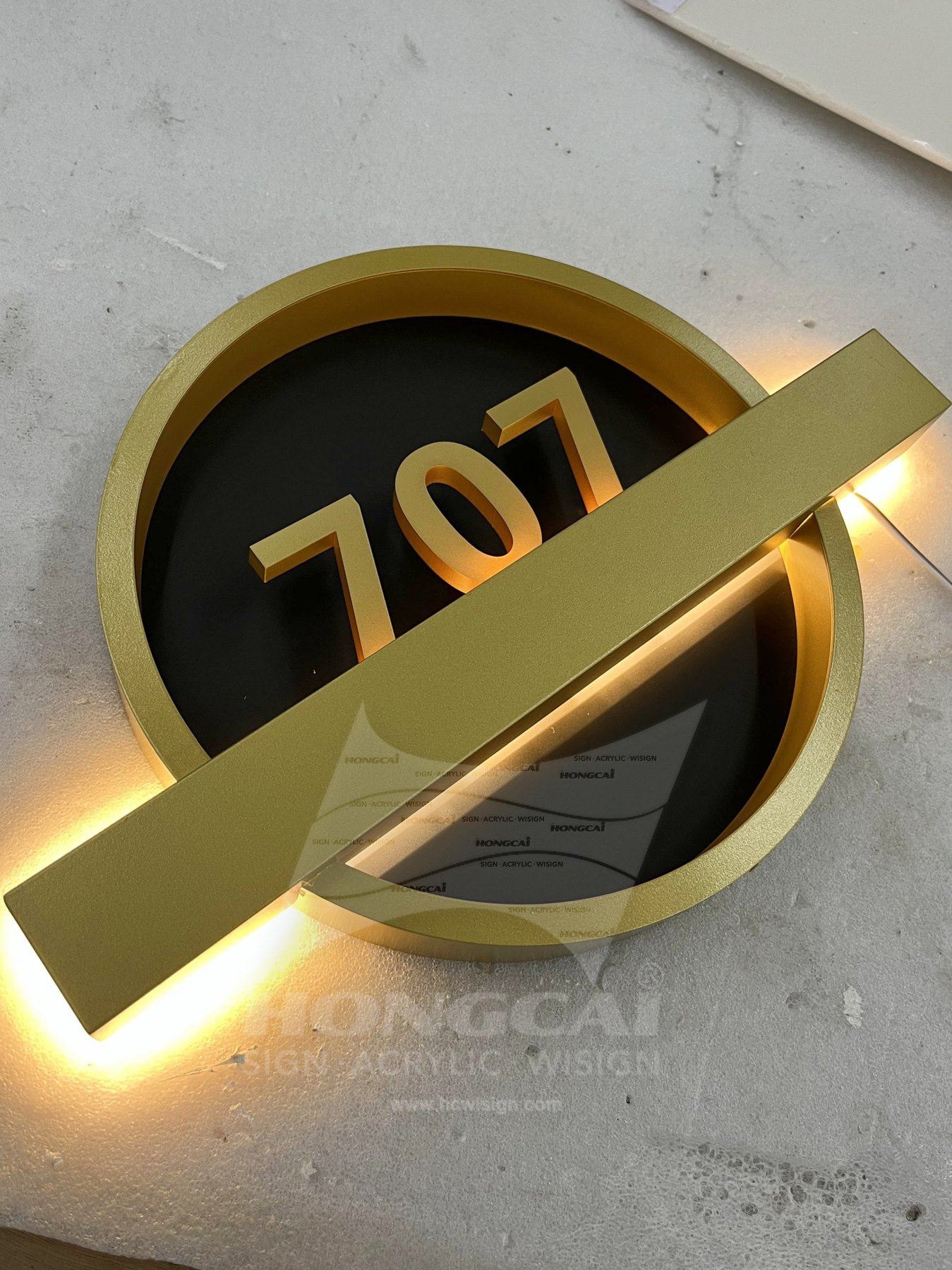
Opaque letter faces with rear illumination create a halo around the outline. Letter height, stroke width and the wall surface guide the construction, which should be reviewed through drawings and samples.
Narrow strokes, cutouts and connecting elements affect the light-source layout and fixings. Supply vector artwork to review cable exits and installation against the logo outline.
Small room plates, reception logos and wall lettering call for different rear-lighting arrangements. Confirm viewing distance, ambient light and background color before choosing the illuminated areas.
A black circular plate, gold outer ring and diagonal metal element with warm light cast onto the wall from behind. This is a room-plate lighting reference; dimensions and construction are reviewed for each project.
View the complete project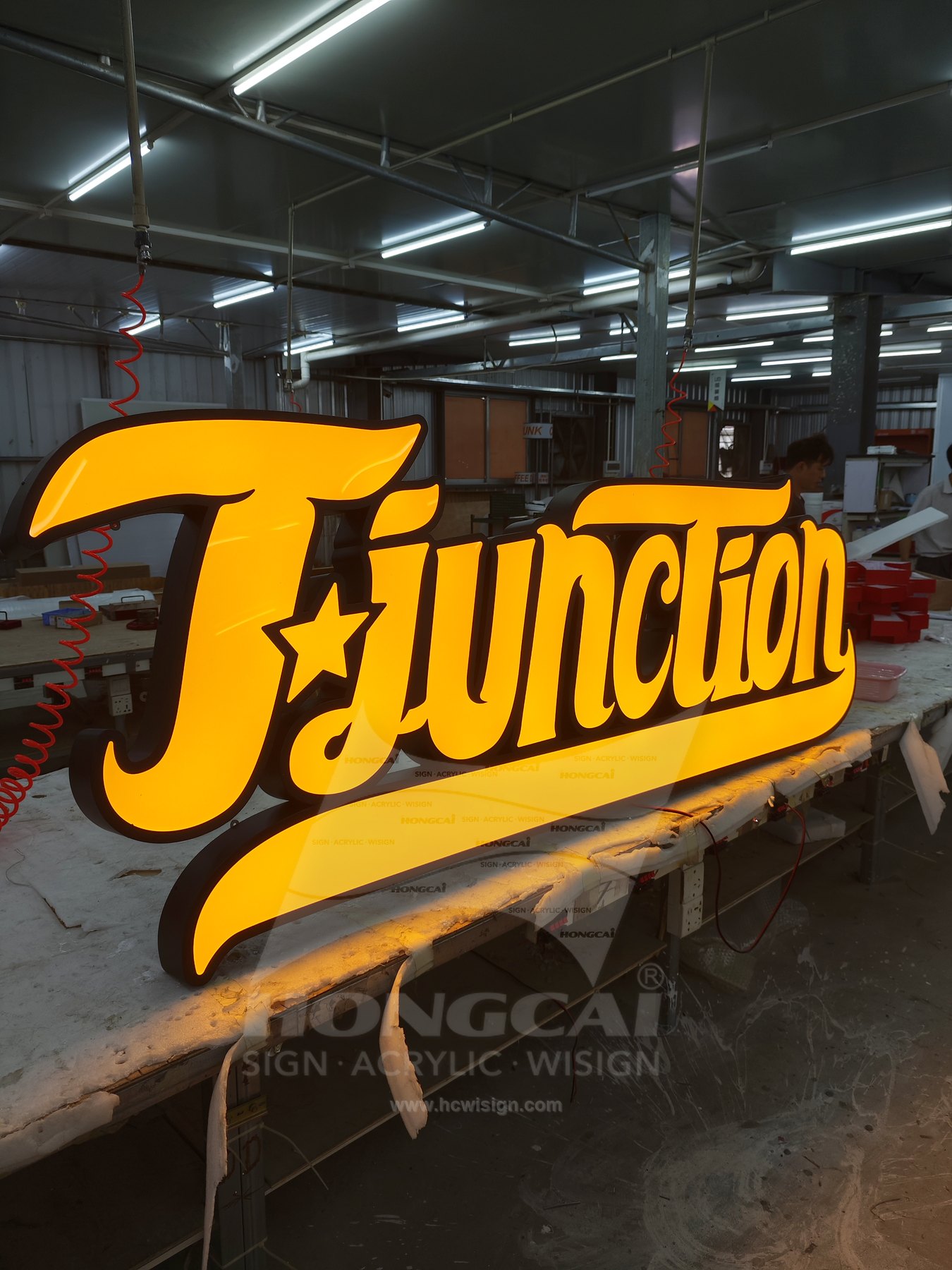
The factory photograph shows warm yellow illuminated faces and a dark outline. This front-lit example can be compared with the rear halo of the 707 plate to explain which part of a proposed sign should glow.
View the complete projectA rear-lit sign projects light onto its mounting background, making the wall part of the lighting result. Share the wall color, material, texture and site photographs. Those details are as useful as a preferred light color when deciding how the halo should look from the normal viewing position.
Light, dark, textured and glossy walls can produce different halo brightness and edges. Note the ambient lighting, main viewing angle and letter dimensions. Review a sample against a background close to the installation surface, rather than choosing the effect solely from a photograph taken in a dark setting.
Review body depth, stand-off spacing and light-source layout together. A lighting test can reveal merged halos between letters, tight corners and narrow strokes. The circular black-and-gold 707 room plate shows a warm rear halo and provides a small room-plate lighting reference for this discussion.
Confirm the supply location, cable holes, fixing points and accessible driver space before fabrication. Share wall and rear-structure information with the installation team and agree how the assembly will be removed. Maintenance access should be planned so servicing the light source does not depend on damaging finished decoration.
Combine brand artwork, dimensions and site information in one brief to review fabrication, sample scope and quotation. For outdoor use, also describe exposure conditions and the mounting location.